Harnessing Emotional Intelligence in Trading
Key Takeaways
- Emotional recognition is fundamental for successful trading.
- Developing emotional intelligence enhances risk management capabilities.
- Strategies such as mindfulness can boost emotional awareness.
- Fear and greed significantly impact trading performance.
- Overtrading can lead to severe financial consequences.
Table of contents
- The Power of Emotional Recognition
- Emotional Intelligence and Risk-Management
- Strategies to Boost Emotional Intelligence
- How Mindset Shapes Discipline, Risk Management, and Resilience
- Fear and Greed: The Dual Catalysts of Trading Mistakes
- The Perils of Overtrading: Understanding and Avoiding it
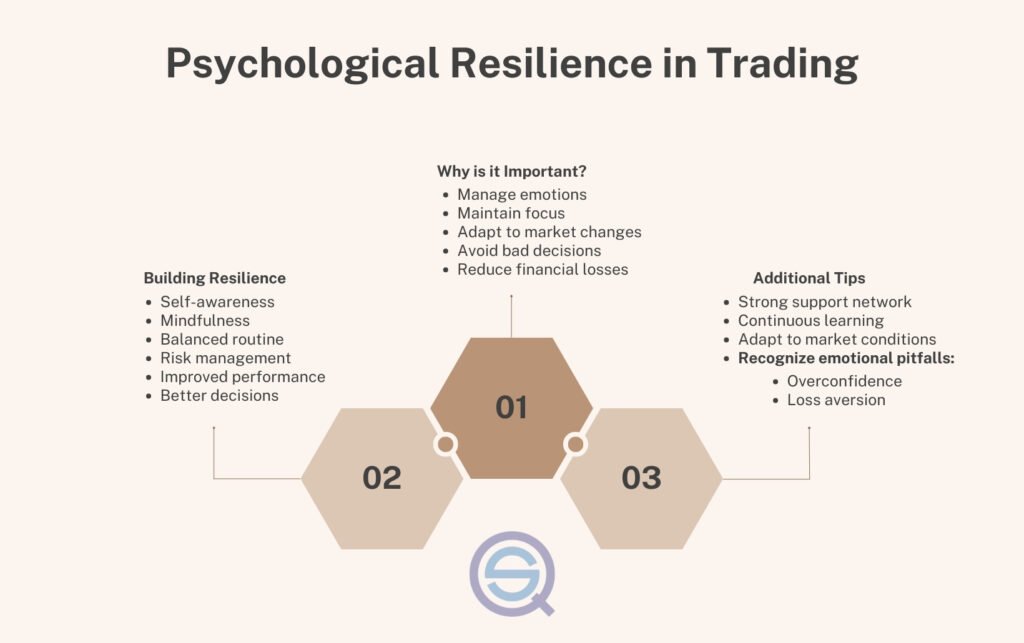
- Cultivating Resilience: The Underrated Key to Trading Success
- The Call to Action: Rising Above Emotional Trading Mistakes
- Frequently Asked Questions
In the world of trading, understanding and managing emotions is not just an asset; it is a necessity. This blog will explore the critical role of emotional intelligence in trading, offering insights and strategies for traders looking to enhance their performance.
The Power of Emotional Recognition
Emotional recognition is the first step towards becoming a successful trader. This profound awareness equips traders to identify their emotional state during the demanding decision-making process. Identifying emotions can lead to better trades, heightened discipline and a reduced likelihood of making impulsive emotional decisions. This quality translates to better individual trading performance and sets the foundation for resilience that is essential to long-term trading success.
Emotional Intelligence and Risk-Management
Emotional intelligence plays a significant role in risk management. It enables traders to remain calm during challenging market situations, which stimulates rationality and reduces the likelihood of impulsive decisions. It allows traders to contain the undue influence of fear or greed, facilitating better, well-balanced decision-making during trading.
Strategies to Boost Emotional Intelligence
Traders can leverage various tactics to boost their emotional intelligence within the trading environment. These can include mindfulness practices, maintaining a trading journal to reflect upon and learn from past experiences, and seeking constructive criticism from mentors or peers to enhance learning. Continual learning and personal development can also help traders improve their emotional intelligence, leading to better decision-making and trading success.
Decoding the Mistakes in Position Sizing
How Ignoring Volatility Can Cost You
In trading, volatility is a variable that consistently changes. Position sizing needs to be adjusted according to the prevailing volatility levels. Failing to do so might expose traders to considerably high risks leading to huge losses.
How Ignoring Volatility Can Cost You
In trading, volatility is a variable that consistently changes. Position sizing needs to be adjusted according to the prevailing volatility levels. Failing to do so might expose traders to considerably high risks leading to huge losses.
The Perils of Overlooking Stop-Loss Orders
Trading without stop-loss orders is akin to walking on a tightrope without any safety net underneath. Traders can protect their capital and limit potential losses by using stop-loss orders that offer predetermined exit points. Overlooking this could severely impact your trading performance.
The Problem with Abandoning Your Trading Plan
All seasoned traders know the value and importance of a robust trading plan. However, succumbing to greed or panic may lead to abandoning the same plan hastily, giving rise to inconsistencies, unnecessary risks, and financial disasters.
Oversizing Trades: A Recipe for Disaster
“More is better” is not always the case when it comes to position sizing. Some traders make the fatal mistake of allocating a significant portion of their capital to a single trade. It’s a gamble that can lead to devastating losses. “More is better” is not always the case when it comes to position sizing. Some traders make the fatal mistake of allocating a significant portion of their capital to a single trade. It’s a gamble that can lead to devastating losses.
Unveiling the Biggest Trading Blunders Traders Commit
How Erroneous Position Sizing Results in Hefty Losses
Up next, we will delve into the impacts of incorrect position sizing and how they can prompt a series of undesirable outcomes, including financial loss, emotional distress, and potentially even career-ending decisions.
First Steps in Trading: Beginner Mistakes in Position Sizing
Identifying and Avoiding Beginner Pitfalls
Stepping into the world of trading can be overwhelming. Many newcomers make costly blunders by not fully understanding the importance of position sizing. Here, we’ll cover common errors beginners make and provide insights on how to avoid them.
Connecting the Dots: How Position Sizing Mistakes Lead to Trading Failures
Tracing the Impact on Trade Outcome
Position sizing decisions that go wrong can have dire consequences on account balances and trading outcomes. In this section, we will address how one wrong move can lead to a cascade of trading failures.
Navigating the Minefield: Strategies to Avoid Position Sizing Errors
Active Measures for Successful Position Sizing
To avoid falling into the trap of position sizing mistakes, traders need to follow a set of conventions and strategies. In this section, we’ll propose a series of actionable recommendations aimed at helping traders avoid such mishaps.
Stepping up the Game: Advanced Techniques for Optimal Position Sizing
Mastering the Art of Proper Position Sizing
As with any skill, there’s always room for improvement when it comes to position sizing. By using advanced techniques, traders can optimize their trading strategy further. The following section will provide readers with advanced methodologies to perfect their position sizing strategy.
Crafting a Foolproof Trading Plan to Prevent Position Sizing Mistakes
Incorporating Position Sizing in Your Trading Plan
A comprehensive trading plan is the heart and soul of successful trading. An effective plan consists of explicit guidelines on position sizing, ensuring that potential risks are mitigated and that profitability is maximized.
The Final Takeaway
Position sizing is the invisible thread that can weave a pattern of success or failure for traders. Through the learning and understanding of common position sizing mistakes, traders can improve their skills, minimize losses and exceed in their trading aspirations. The path to trading success is littered with many learnings – and mastering position sizing is a critical one.